
Toothaches can be agonizing, but the uncertainty of “costs” before stepping into a dental clinic is often just as distressing. In Hong Kong, tooth filling costs vary significantly, ranging from a few hundred to several thousand dollars.
This article breaks down the pricing structure of tooth fillings in Hong Kong, exploring the impact of cavity surfaces, materials, and equipment on the total fee. By referencing dental hospital benchmarks, we offer an objective comparison of resin versus ceramic restorations to help you identify hidden technical costs and market traps.
If you are considering a tooth filling, here is the core information for the 2026 Hong Kong market:
This is the most common misunderstanding among the public. Dentists do not simply charge per “tooth”; pricing is based on the extent of decay (Number of Surfaces).
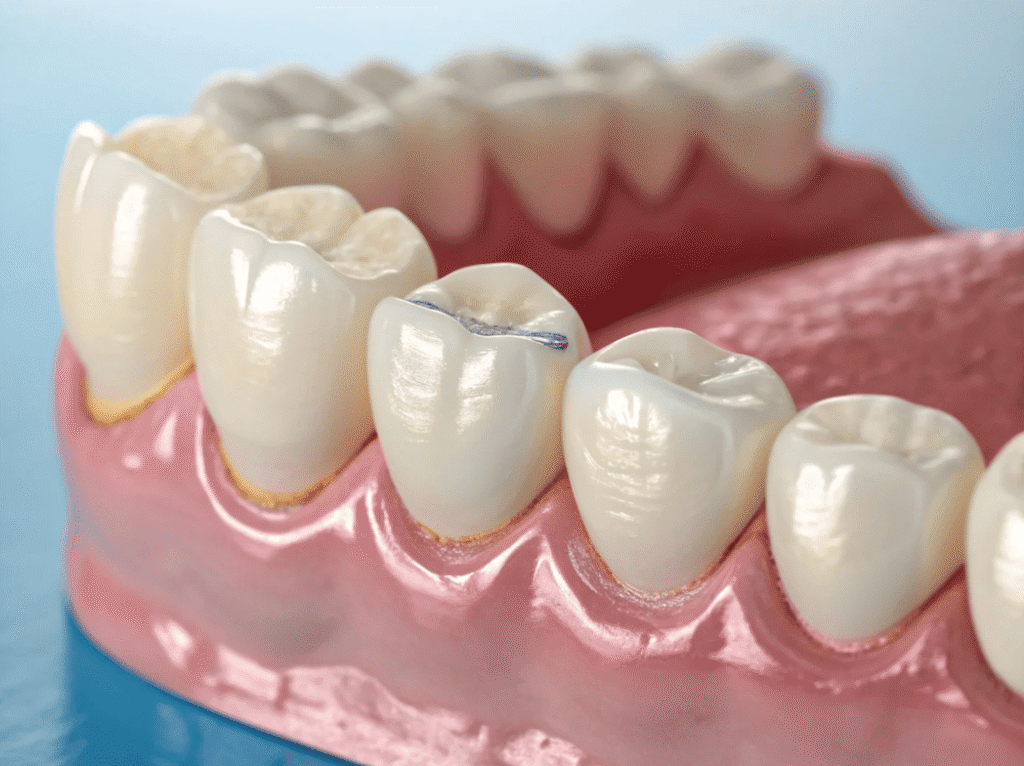
Anatomically, a tooth has five surfaces: occlusal (biting surface), mesial (towards the front), distal (towards the back), buccal (cheek side), and lingual (tongue side).
The following content refers to the private patient fee schedule of The Prince Philip Dental Hospital as a benchmark (generally HK$900 – $3,000).
Filling Category | Description of Decay | Difficulty | Reference Fee (HKD) |
Simple (One Surface) | Decay is limited to the grooves on the biting surface and does not extend between teeth. | Lower | $900 – $1,200 |
Class II (Two Surfaces/Interproximal) | Decay occurs in the gap between two teeth, requiring the reconstruction of the tooth’s curve and contact point. | High (Requires Matrix Band) | $1,500 – $2,000 |
Complex (Multiple Surfaces) | Decay involves more than 3 surfaces or has weakened the cusp. | Extremely High (Requires layered reconstruction) | $2,500 – $3,000 |
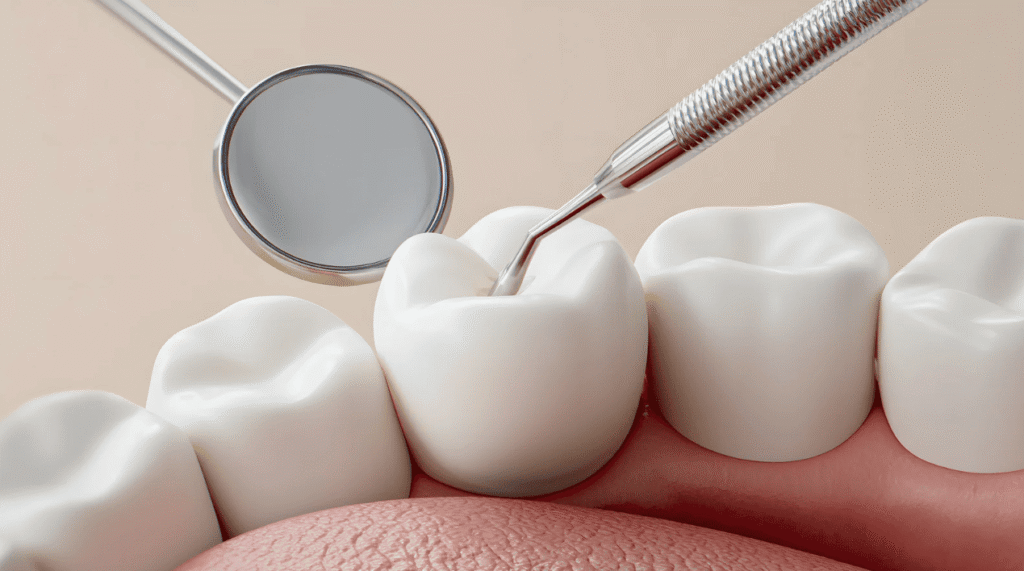
Particularly for “Double Surface” fillings, the dentist must use a special Matrix Band to reconstruct the tooth’s original curvature. If handled poorly, food will easily get trapped between teeth, leading to gum inflammation or “secondary decay”.
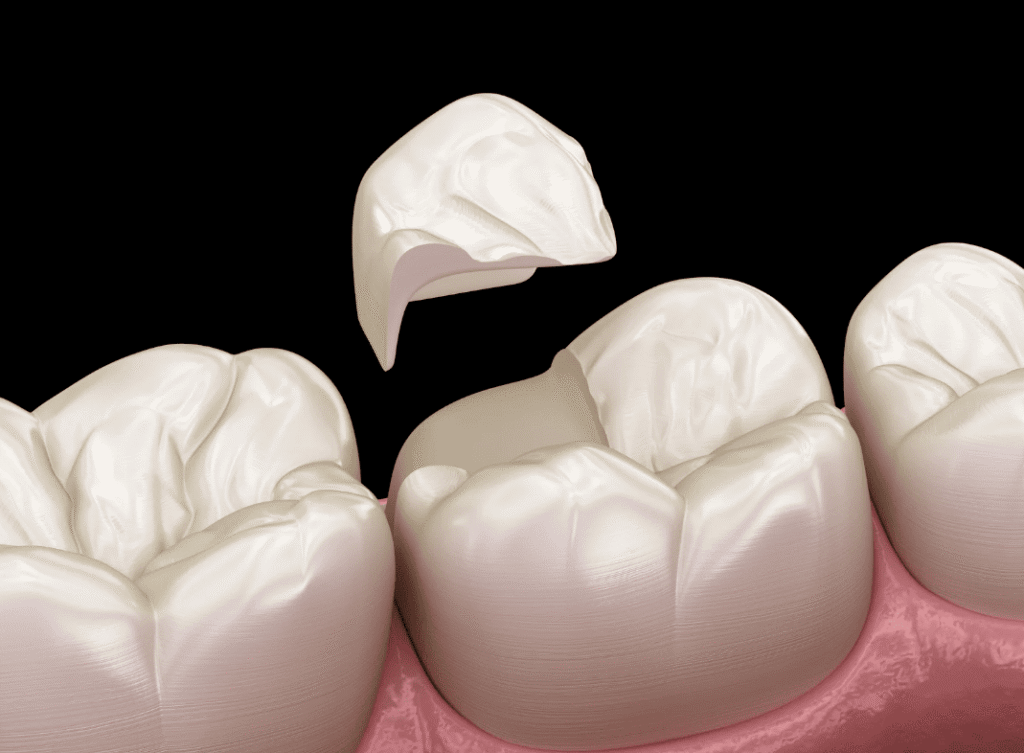
Aside from the size of the cavity, the material used is a primary factor in determining the cost of a filling.
When the decay is too extensive (e.g., exceeding 50% of the tooth surface), resin may lack the strength to provide support and can easily fracture. In such cases, a dentist will recommend upgrading to an Inlay or Onlay.
*Smith & Jain Professional Perspective: While Inlays/Onlays are more expensive upfront for large cavities in back teeth, their durability prevents the tooth wear caused by repeated fillings, making them more cost-effective in the long run.
When “price shopping,” patients often overlook the invisible technical costs. Why do some clinics charge a few hundred dollars while others charge over a thousand? The difference often lies in the critical steps that can “extend the life of a filling by 3-5 years”:
The mouth is a humid environment, but modern composite resins are “hydrophobic”.
For the most challenging “interproximal cavities (Class II),” the focus of the restoration is on reconstructing perfect contact points.
A filling is not finished just because it has been “filled”.

“A stitch in time saves nine”: If you notice tooth sensitivity, discoloration, or an old filling falling out, please address it as soon as possible to avoid missing the golden window for preserving your natural teeth.
Smith & Jain Dentists | Professional Dental Team in Central: Located in the heart of Central, we provide a transparent, professional, and comfortable dental experience.
Sometimes you may see advertisements for extremely low-priced fillings (e.g., a few hundred dollars all-inclusive). Patients should be aware of the potential hidden costs behind these prices:
Cheap resins often have a higher polymerization shrinkage rate. This means the resin contracts after hardening, pulling at the tooth edges and leading to long-term post-operative pain and sensitivity. It can even create micro-cracks that allow bacteria to re-invade. We select low-shrinkage resins from international leading brands (such as 3M, GC, Tokuyama), which, despite higher costs, significantly reduce post-operative sensitivity.
To save time (finishing in 5–10 minutes), some low-cost services fill the entire cavity with resin at once. The correct procedure should be layered filling, where each layer does not exceed 2mm and is light-cured individually. This offsets shrinkage stress and ensures the bottom of the filling is fully hardened.
The devil is in the details of the bill. A “low price” might only refer to the “opening fee” or a single-surface filling. Once consultation fees, digital X-rays, infection control fees (PPE), and local anesthesia are added, the total cost is often not low at all—and may even be higher than clinics with transparent upfront pricing.
In the dental world, “procrastination” is the most expensive treatment fee.
Smith & Jain Dentists is located in the heart of Central, and we refuse to compromise on medical quality. We refer to the official Prince Philip Dental Hospital fee benchmarks and insist on using rubber dam isolation, high-magnification diagnostics, and top-tier 3M/Ceramic materials. This is not just for aesthetics, but to ensure this filling accompanies you for years to come.
Yes. Private dental clinics generally accept Elderly Health Care Vouchers. It is recommended to specify this when making your appointment.
No. A filling is only for cavities that have not yet reached the nerve. If bacteria have already penetrated the dental pulp, a Root Canal Treatment is required, and the cost will be calculated separately.
Disclaimer
All information provided on this website is for informational purposes only and is intended to help readers gain general knowledge about dental health. The content on this website should not be considered a substitute for professional dental diagnosis, advice, or treatment. If you have any dental concerns, please consult a licensed dentist for appropriate medical advice and treatment.
While we strive to ensure the accuracy and completeness of the information provided, we do not guarantee that all content is always up-to-date or applicable to individual circumstances. Smith & Jain Dentists and its affiliates are not responsible for any direct or indirect damages resulting from the use of this website’s information.
This website may include links to external websites for reference purposes only. Smith & Jain Dentists is not responsible for the content or accuracy of third-party websites.
Our expert team is here for emergency and routine care to keep your smile healthy. Call or WhatsApp us today!