A dental implant is an advanced dental technique for replacing missing teeth, effectively restoring a natural smile and chewing function. Yet many people still have questions about the procedure, its risks, and aftercare. In this article, our dental team breaks down every stage of the implant journey — from candidacy assessment and the 10 surgical steps, to potential side effects and long-term care — so you can make an informed decision with full confidence.
What Is a Dental Implant?
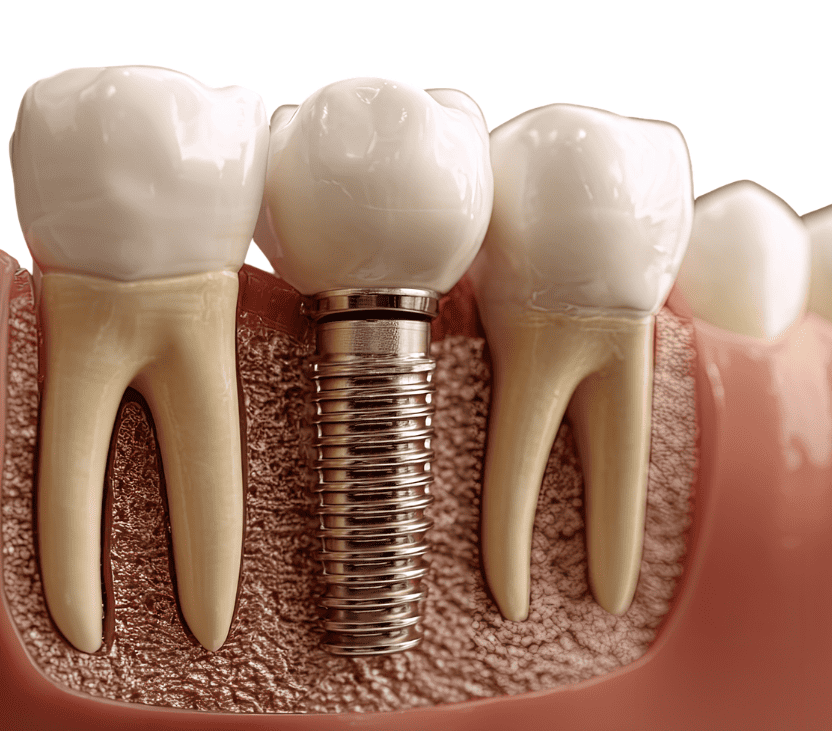
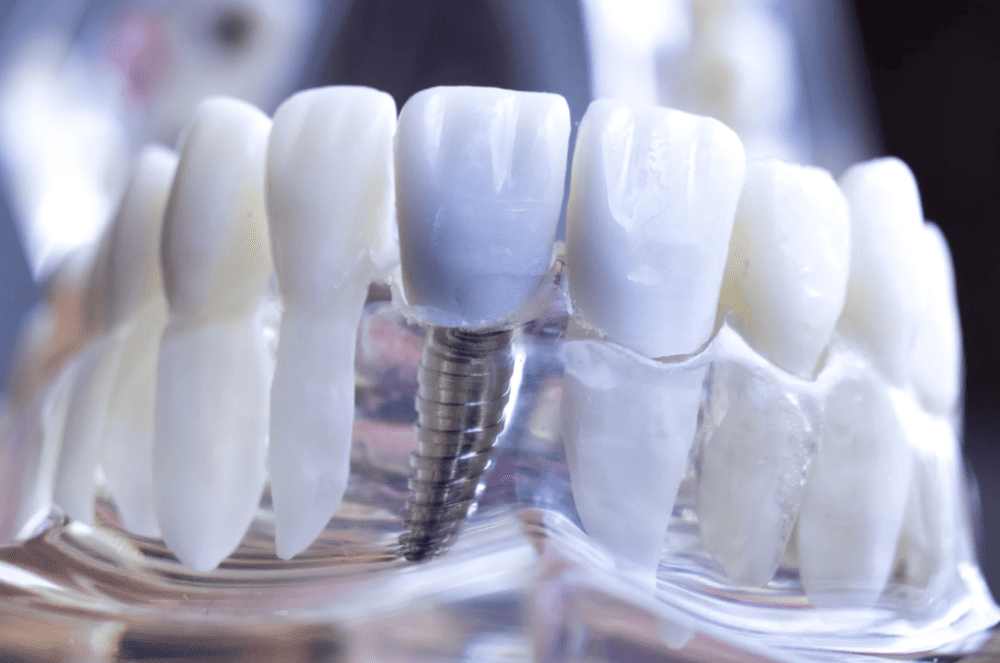
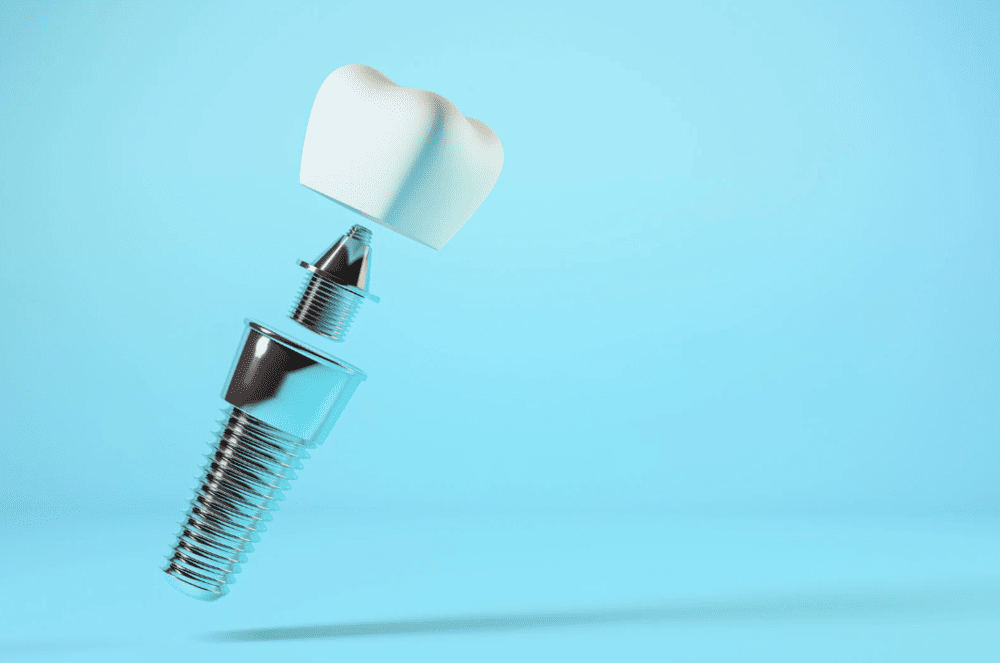
A dental implant is a restorative technique in which a titanium artificial tooth root is surgically placed into the jawbone. Once the implant has fused firmly with the bone — a process known medically as osseointegration — an abutment is attached and a crown is secured on top, fully rebuilding the missing tooth.
Because an implant completely replicates the “root + crown” structure of a natural tooth, it looks more natural and chews more effectively than a bridge or removable denture. It also helps prevent jawbone resorption and delays facial collapse.
The Three Components of a Dental Implant
| Component | Common Materials | Main Function |
|---|---|---|
| Implant Fixture | Commercially pure titanium or titanium-zirconium alloy | Replaces the natural tooth root; anchored in the jawbone to provide a stable foundation. |
| Abutment | Titanium or zirconia | The connecting piece between the fixture and the crown; transmits force to the implant. |
| Crown | All-ceramic (zirconia) or porcelain-fused-to-metal | Reproduces the appearance and chewing surface of a natural tooth, restoring aesthetics and bite function. |
Why Are Dental Implants Made of Titanium?
Since titanium was first successfully applied to human dental implants by Swedish professor Per-Ingvar Brånemark in 1965, it has accumulated over 60 years of clinical history and become the gold-standard implant material:
- Excellent biocompatibility: does not trigger rejection by the body
- Osseointegration capability: bonds directly with the jawbone to form a stable support
- Strong yet lightweight: highly resistant to biting forces while remaining light
- Corrosion-resistant: stable over the long term in the moist oral environment
For the very rare patients with metal allergies, zirconia (all-ceramic) implants are now also available, though their long-term clinical data is more limited than that of titanium.
Implant vs Bridge vs Removable Denture: Which Tooth-Replacement Option Is Best?
Before choosing a solution, understand the key differences between the three:
| Comparison | Dental Implant | Dental Bridge | Removable Denture |
|---|---|---|---|
| Chewing power restored | 80%–90% (close to a natural tooth) | About 60%–70% | About 20%–30% |
| Lifespan | 20+ years; can last decades with good care | About 5–15 years | About 5–8 years |
| Effect on adjacent teeth | No effect | Requires grinding down two healthy teeth | No grinding, but presses on the gums long-term |
| Prevents jawbone resorption | ✅ Effective | ❌ Cannot | ❌ Cannot |
| Stability & comfort | Fixed, like a real tooth | Fixed | Prone to loosening; may affect speech |
| Daily cleaning | Same as a natural tooth | Requires special floss under the bridge | Must be removed and cleaned daily |
| Treatment time | 3–9 months | About 2–3 weeks | About 1–2 weeks |
| Cost level | Higher (see detailed fees) | Moderate | Lower |
| Suitable for | Single tooth to full-arch loss | 1–3 consecutive missing teeth with stable neighbours | Multiple missing teeth, limited budget, or those unsuitable for surgery |
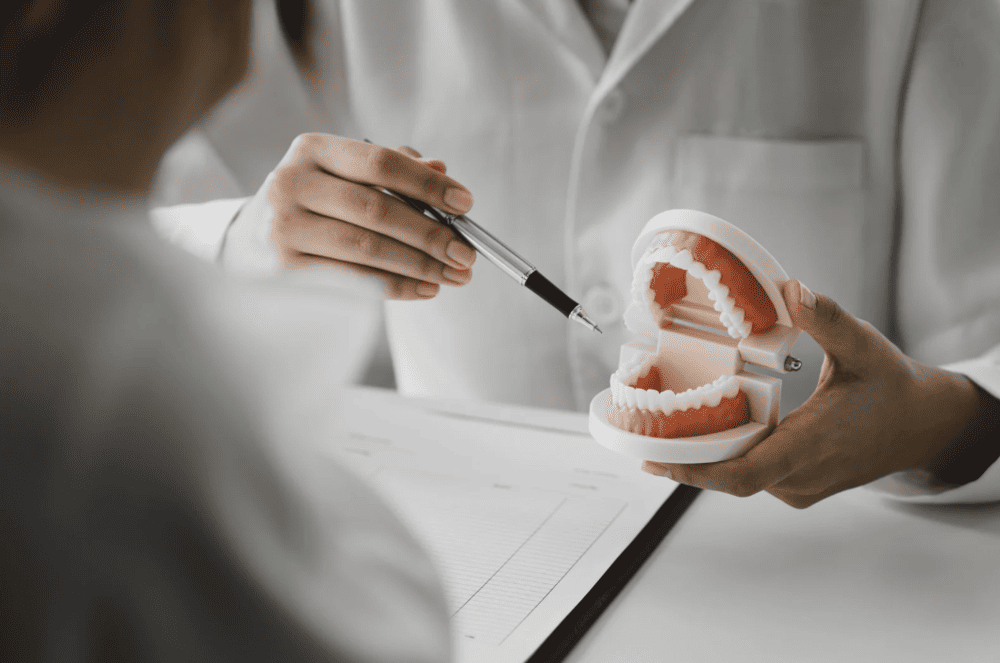
Summary: Removable dentures win on speed and price but are the least stable; bridges are fixed but sacrifice healthy adjacent teeth and cannot stop bone loss at the gap; implants come closest to natural teeth in aesthetics, function, durability, and protection of oral structures, making them the ideal long-term solution for missing teeth.
👉 Further reading: How to handle a lost tooth? Causes of tooth loss and a detailed comparison of implants, dentures, and bridges
What Types of Dental Implants Are There?
Different cases call for different implant approaches. The five common types are:
1. Single Implant
The most common type, suitable for a single missing tooth. One fixture carries one crown; surgery takes about 30–60 minutes and does not affect the neighbouring teeth.
2. Multiple Implants / Implant-Supported Bridge
Suitable for several adjacent missing teeth. The “two fixtures supporting three to four crowns” approach can be used, avoiding the need to place a fixture for every missing tooth and reducing the extent of surgery.
3. All-on-4 Full-Arch Implants
Suitable for a fully or near-fully edentulous arch. Just 4 fixtures (the two rear ones placed at an angle) support an entire row of fixed teeth; in some cases a temporary set can be worn the same day as surgery. 👉 See our All-on-4 full-arch implant service for details.
4. Immediate Implant Placement
The fixture is placed into the same socket on the day of extraction, reducing the number of surgeries and shortening the overall treatment. However, it has strict requirements for bone condition and infection control, and a dentist must assess suitability.
5. Guided Implant Surgery
Combining 3D CBCT imaging with a computer-designed surgical guide, this controls the placement error to within about 0.5 mm — improving precision, shortening surgery time, and reducing trauma. It is particularly suited to complex cases near nerves or the maxillary sinus.

Who Is Suitable for Dental Implants?
Implants are not immediately suitable for everyone; suitability depends on oral and general health.
✅ Situations Suitable for Implants
| Situation | Explanation |
|---|---|
| Single or multiple missing teeth | Tooth loss due to decay, gum disease, or accident |
| Discomfort with removable dentures | Loose dentures affecting eating or speech clarity |
| Wish to avoid damaging adjacent teeth | Unwilling to grind down healthy teeth for a bridge |
| Need to preserve bone structure | Long-term tooth loss causes jawbone deterioration; an implant stimulates and maintains the bone |
| Desire natural aesthetics and function | Wish to restore an appearance and chewing power close to a real tooth |
| Jaw development complete | Generally adults aged 18 and above |
⚠️ Situations Requiring Delay or Careful Assessment
| Situation | Recommended Action |
|---|---|
| Uncontrolled diabetes | Bring blood sugar under control (HbA1c below 7%) before assessment |
| Severe osteoporosis | Evaluate the condition and history of bisphosphonate medication |
| Heavy smoking (over 20 cigarettes/day) | Significantly lowers osseointegration success; quit at least 4 weeks before surgery and continue after |
| Recent head and neck radiotherapy | Coordinate the optimal treatment timing with the treating physician |
| Active gum disease or oral infection | Complete periodontal treatment and control the infection first |
| Uncontrolled hypertension or cardiovascular disease | Stabilise the condition and coordinate with the physician first |
| Currently taking anticoagulants | Coordinate medication adjustment with the prescribing doctor |
| Pregnancy | Non-urgent surgery is best scheduled after delivery |
Professional Advice
If you are unsure about your own situation, the most reliable approach is a clinical examination with 3D imaging analysis. Contact Smith & Jain Dentists for an initial assessment, and our dentists will create a personalised implant plan for you.
The Complete Implant Process: 10 Steps Explained
A dental implant is a systematic, multi-stage treatment. Below are the 10 steps of the standard process, including timing and what is required of the patient:
Step 1: Initial Assessment and 3D Imaging Diagnosis
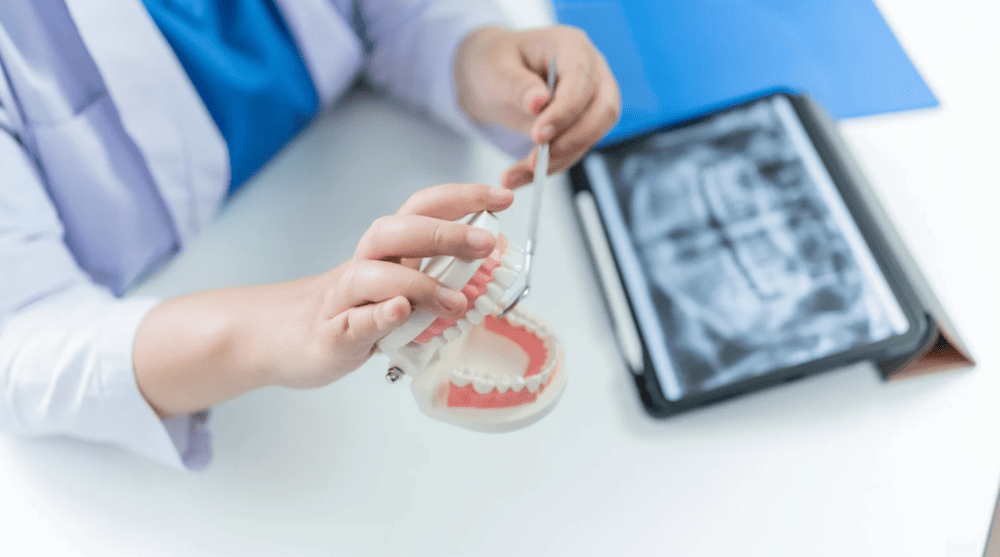
The dentist takes a detailed medical history and performs a thorough oral examination, then uses 3D CBCT (cone-beam computed tomography) to precisely analyse jawbone density, nerve distribution, and adjacent tooth structures, ensuring accurate implant positioning.
Step 2: Creating a Personalised Treatment Plan
Based on the imaging, the dentist determines the implant brand and size, placement position and angle, and whether bone grafting or other adjunctive procedures are needed, then provides a clear written treatment plan and budget.
Step 3: Preparatory Treatment (if required)
This includes extracting teeth that cannot be saved, periodontal treatment, or — where bone volume is insufficient — bone grafting / sinus lift surgery. This step ensures the surgical site is healthy and stable.
Step 4: Implant Placement Surgery
The surgery is performed under local anaesthesia and is essentially painless; anxious patients may opt for dental sedation. The dentist opens the gum, precisely drills the jawbone, places the titanium fixture, and finally sutures the wound. A single-tooth implant takes about 30 to 90 minutes; it is an outpatient procedure with no hospital stay required.
Step 5: Immediate Post-Operative Care (the Golden 72 Hours)
The first 72 hours are critical for reducing swelling: apply intermittent cold compresses, take painkillers and antibiotics as directed, eat cool soft foods, and avoid smoking, alcohol, and strenuous exercise.
Step 6: Osseointegration Period (about 3 to 6 months)
The fixture fuses naturally with the jawbone: the lower jaw generally needs 3–4 months, while the upper jaw needs 4–6 months due to its looser bone. During this time, avoid chewing hard foods on the surgical area and attend follow-ups on schedule. A temporary denture can be worn to maintain appearance if needed.
Step 7: Fitting the Healing Abutment
Once osseointegration is complete, a minor procedure exposes the top of the fixture and fits a healing abutment, allowing the gum to shape naturally over about 2–4 weeks in preparation for the crown.
Step 8: Digital Scanning and Crown Fabrication
A digital oral scan (or traditional impression) precisely records the bite and gum contours, and the laboratory custom-makes a crown that matches the colour and shape of the neighbouring teeth — taking about 1–2 weeks.
Step 9: Crown Placement and Bite Adjustment
The crown is securely fixed onto the abutment by screw or cement, and the bite is finely adjusted for comfortable, natural chewing. At this point, the implant’s function and aesthetics are fully restored.
Step 10: Long-Term Follow-Up Plan
For the first 3 months after completion, monthly follow-ups are recommended to monitor implant stability; thereafter, professional cleaning and check-ups every 6 months help prevent peri-implantitis and keep the implant durable for the long term.
Implant Treatment Timeline
| Time | Stage |
|---|---|
| Week 0 | Initial assessment, 3D CBCT scan, treatment plan |
| Weeks 1–2 | Plan confirmation; any bone grafting or extraction done first (may require an extra 3–6 months of healing) |
| Week 3 | Implant placement surgery |
| Week 4 | Suture removal, confirm wound healing |
| Weeks 4–24 | Osseointegration period (lower jaw ~3–4 months; upper jaw ~4–6 months), regular follow-ups |
| Week 25 | Healing abutment fitted |
| Weeks 26–28 | Digital scanning, crown fabrication |
| Weeks 29–30 | Crown placement, bite adjustment — treatment complete |
5 Factors That Affect Treatment Time
| Factor | Effect |
|---|---|
| Implant location | The upper jaw’s looser bone needs 1–2 months more than the lower jaw |
| Jawbone condition | Cases needing bone grafting may extend the overall treatment by 3–6 months |
| Surgical method | Immediate placement can shorten it by about 2–3 months |
| General health | Smoking, diabetes, etc. lengthen the healing period |
| Age and healing ability | Varies by individual; younger patients generally heal faster |
Hong Kong Dental Implant Cost Overview
A single-tooth implant performed by a registered dentist in Hong Kong has an all-inclusive total (pre-operative examination + implant surgery + crown) of approximately HK$29,000 to $65,000, with the actual cost depending on the implant brand, jawbone condition, and surgical complexity.
| Fee Item | Reference Range (HKD) |
|---|---|
| Implant surgery (per fixture) | $17,600 – $35,000 |
| Crown restoration | $11,200 – $30,000 |
| Bone graft / sinus lift (if required) | $6,000 – $15,000 |
Reference source: Prince Philip Dental Hospital Schedule of Fees for Private Patients
👉 Want an item-by-item cost breakdown and a comparison of implant brands? Read: [2026 Dental Implant Price Table] How much does an implant cost in Hong Kong? A detailed look at the fees and the factors behind them

What Are the Potential Side Effects of Dental Implants?
Dental implants have a clinical success rate above 95% and are an extremely safe dental procedure; nonetheless, as with any surgical procedure, some risks exist. Below are the incidence rates of various complications and how they are managed:
Complication Incidence Table
| Complication | Incidence | Main Symptoms | Management |
|---|---|---|---|
| Post-operative infection | About 2%–5% | Persistent swelling, redness, pus | Antibiotic treatment, removal of the source |
| Osseointegration failure | About 3%–7% | Loose, unstable implant | Remove the fixture and re-implant once bone conditions improve |
| Nerve involvement | <1% (permanent <0.5%) | Numbness or tingling in the lip or chin | Most recover on their own within a few weeks |
| Peri-implantitis | About 5%–10% | Gum inflammation, bleeding, bone loss | Professional cleaning; severe cases require surgery |
| Loose implant or crown | About 1%–3% | Abnormal bite, loosened component | Adjust the bite, tighten, or replace the component |
Post-Operative Infection
If oral hygiene is poor after surgery or immunity is low, the tissue around the implant may become infected, with symptoms of persistent swelling, redness, or pus. Early use of antibiotics and removal of the source can control it effectively.
Osseointegration Failure
The fixture fails to fuse adequately with the jawbone — commonly due to insufficient bone density, smoking, or premature loading. The fixture must be removed and re-implanted once bone conditions improve.
Nerve Involvement
A lower-jaw implant placed near the inferior alveolar nerve canal may cause temporary numbness in the lip or chin; the vast majority recover within a few weeks, and the rate of progression to permanent damage is below 0.5%. Precise positioning with pre-operative 3D CBCT is the most effective preventive measure.
Peri-implantitis
Similar to gum disease around a natural tooth, plaque accumulation inflames the soft tissue around the implant and goes on to damage the bone support — the leading cause of long-term implant failure. Diligent daily cleaning and regular professional cleaning greatly reduce the risk.
Loosening of the Implant Structure
Uneven distribution of biting pressure or habitually chewing hard items (such as ice cubes or nut shells) can loosen the implant components or crown. Prompt bite adjustment and avoiding bad habits prevent it from worsening.
5 Principles for Reducing Risk
- Choose an experienced dental team and a clinic equipped with 3D CBCT
- Use international implant brands with long-term clinical data
- Strictly follow pre-operative preparation and post-operative care instructions
- Quit smoking and properly manage chronic conditions such as diabetes
- Attend follow-ups on schedule: monthly for the first 3 months, then check-ups and cleaning every 6 months
How High Is the Dental Implant Success Rate?
According to long-term clinical data from the ITI (International Team for Implantology), dental implants are among the highest-success restorative techniques in modern dentistry:
Implant Survival Rate (International Clinical Data)
| Period | Implant Survival Rate |
|---|---|
| 1 year | 98%–99% |
| 5 years | 96%–97% |
| 10 years | 94%–96% |
| 20 years | 89%–93% |
Success Rate by Tooth Position
| Implant Location | 10-Year Success Rate | Difficulty Notes |
|---|---|---|
| Lower front teeth | 97%–98% | Densest bone, highest success rate |
| Lower back teeth | 95%–97% | Requires precise avoidance of the inferior alveolar nerve |
| Upper front teeth | 94%–96% | High aesthetic demands |
| Upper back teeth | 90%–94% | Looser bone, close to the maxillary sinus |
Key Factors Affecting Success
Favourable factors: non-smoking, good oral hygiene, sufficient bone volume, controlled chronic conditions, use of a quality implant brand, surgery by an experienced dentist, and on-schedule follow-ups.
Unfavourable factors: smoking (can lower the success rate by 10%–20%), uncontrolled diabetes, a history of gum disease, night-time teeth grinding, a history of head and neck radiotherapy, and improper aftercare.
It is worth noting that age itself is not a determining factor for success — in healthy older adults, the implant success rate is comparable to that of the general adult population; what matters is chronic disease management and bone condition.
Before and After: Pre-Operative Preparation and Post-Operative Care
The patient’s active cooperation is an essential part of a successful implant.

🗓️ Pre-Operative Preparation Checklist
2 weeks before surgery
- ☑️ Complete a full oral examination and cleaning; treat any decay, gum inflammation, or other latent infections
- ☑️ Fully disclose any systemic conditions (hypertension, diabetes, etc.) and current medications to the dentist
- ☑️ Begin reducing smoking — ideally quit entirely
48 hours before surgery
- ☑️ Avoid smoking and alcohol (alcohol interferes with clotting and healing)
- ☑️ Ensure adequate sleep
- ☑️ Prepare soft foods such as congee and soup in advance
On the day of surgery
- ☑️ Eat normally (unless otherwise instructed by the dentist)
- ☑️ Wear comfortable clothing and allow plenty of time
- ☑️ If sedation is arranged, follow instructions to have a friend or family member accompany you
🩹 Post-Operative Care Timeline
0–24 hours after surgery
- 🧊 Apply intermittent cold compresses to the cheek (15 minutes on, 15 minutes off)
- 💊 Take painkillers and antibiotics as directed
- 🚫 Avoid rinsing, spitting, and using straws, which can disrupt clot formation
- 🥣 Eat cool liquids or soft foods
24–72 hours after surgery
- 💧 Begin gently rinsing with warm salt water or a dentist-prescribed mouthwash
- 🪥 You may brush your other teeth, avoiding the surgical area
- 🚫 Continue to avoid smoking, alcohol, and strenuous exercise
Week 1 after surgery
- ✂️ Follow-up for suture removal (some are dissolvable)
- 🍚 Gradually transition to a normal diet, still avoiding hard or very hot foods
Weeks 2–4 after surgery
- ✅ Resume normal life; the surgical area can return to normal cleaning
- 🚫 Long-term, avoid biting hard items such as ice cubes, crab claws, or nut shells with the implant
🦷 Long-Term Maintenance Schedule
| Care Item | Recommended Frequency |
|---|---|
| Brushing | Twice daily |
| Floss / interdental brush around the implant | Once daily |
| Professional cleaning and implant check | Every 6 months |
| X-ray to monitor bone level | Every 1–2 years |
Debunking Common Implant Myths
❌ Myth 1: Implant surgery is very painful ✅ Fact: The surgery is performed under local anaesthesia and is painless during the procedure; post-operative discomfort is controllable with painkillers, and many patients describe it as easier than a wisdom tooth extraction.
❌ Myth 2: Older people can’t get implants ✅ Fact: Age is not a contraindication. In healthy older adults, the success rate is comparable to the general adult population — the key is chronic disease management and bone assessment.
❌ Myth 3: Diabetic patients can’t get implants ✅ Fact: Diabetic patients with well-controlled blood sugar (HbA1c below 7%) can safely get implants, with a success rate only slightly below that of the general population.
❌ Myth 4: Implants cause cancer or trigger rejection ✅ Fact: Titanium implants have over 60 years of clinical history and are approved by health regulators worldwide; there is no evidence linking them to cancer, and rejection reactions are extremely rare.
❌ Myth 5: Implants only last a few years ✅ Fact: With good care, the fixture can last over 20 years — and decades with excellent care; the crown generally needs replacing after about 10–15 years.
❌ Myth 6: Implants are false teeth and don’t need cleaning ✅ Fact: Peri-implantitis is the leading cause of implant failure. Like natural teeth, implants need daily cleaning and regular professional cleaning.
❌ Myth 7: Everyone can have immediate placement done in a single day ✅ Fact: Immediate placement and immediate loading techniques are only suitable for cases with ideal bone and infection conditions, must be assessed by a dentist, and are not suitable for everyone.
❌ Myth 8: Getting implants abroad is half-price, so it must be a better deal ✅ Fact: You must factor in the cost of multiple trips, follow-up care, and the difficulty of handling complications — it is not necessarily more economical. For a detailed analysis, see the Dental Implant Price Table: Hong Kong vs Overseas Fees.
Conclusion
With function, aesthetics, and jawbone protection close to those of a natural tooth, dental implants have become the first-choice solution for replacing missing teeth. Their success rests on three pillars: precise pre-operative assessment, professional surgical execution, and the patient’s long-term cooperation with aftercare. If you are considering implants, we recommend an early clinical examination with 3D imaging analysis so a dentist can design the most suitable personalised plan for you.
Frequently Asked Questions
Is the implant procedure painful? Do I need to be hospitalised?
The surgery is performed under local anaesthesia and is essentially painless; anxious patients may opt for dental sedation. Mild post-operative swelling and discomfort can be eased with painkillers and cold compresses, usually subsiding within 3–7 days. Implants are an outpatient procedure — no hospital stay is needed, and you can go home to rest once it’s done.
How long do dental implants last?
With good oral hygiene and regular follow-ups, the fixture can last over 20 years — and decades with excellent care; international data shows a 10-year survival rate of 94%–96%. The crown generally needs replacing after about 10–15 years.
Are dental implants dangerous?
Implants are extremely safe, with an overall success rate above 95%. In a minority of cases, complications such as infection (2%–5%), osseointegration failure (3%–7%), or peri-implantitis (5%–10%) may occur; choosing an experienced dentist, combined with 3D CBCT pre-operative planning and proper aftercare, greatly reduces the risk.
What are the disadvantages of dental implants?
The main drawbacks are the longer treatment time (generally 3–9 months) and higher cost; if the jawbone is insufficient, bone grafting is needed first, adding time and cost. However, compared with bridges and removable dentures, implants offer better stability, chewing power, and durability, making them more cost-effective in the long run.
Can older adults get dental implants?
Yes. Age itself is not a contraindication; in healthy older adults the success rate is comparable to that of the general adult population. The key is whether chronic conditions (such as diabetes or osteoporosis) are controlled and whether jawbone volume is sufficient, which a dentist must assess.
What’s the difference between an implant, a bridge, and a removable denture?
An implant is an independently placed fixed restoration with chewing efficiency at 80%–90% of a natural tooth; it doesn’t harm adjacent teeth and slows bone resorption. A bridge requires grinding down two healthy teeth and lasts about 5–15 years. A removable denture is the least stable and must be taken out and cleaned daily.
Can I get implants if I have insufficient jawbone?
Yes. After rebuilding bone volume through bone grafting (bone powder) or a sinus lift, implants can still succeed, with these procedures having a success rate of about 80%–90%. Whether adjunctive surgery is needed must be assessed with 3D CBCT imaging.
How long after extraction do I need to wait before getting an implant?
It depends on the case: those with ideal conditions can have “immediate placement”; typical cases are advised to wait about 2–3 months after extraction for initial socket healing before placement; those with a history of severe infection may need to wait 3–6 months.
What do I do about missing teeth during the implant process?
During osseointegration (3–6 months), a temporary denture or temporary bridge can be worn to maintain appearance and basic function. This is especially recommended for the aesthetic front-tooth zone — please discuss it with your dentist during the treatment-planning stage.
Why do I have to wait 3 to 6 months before the crown is fitted?
The fixture needs time to complete “osseointegration” with the jawbone, forming a bond strong enough to bear chewing forces. Premature loading is one of the leading causes of osseointegration failure, so the waiting period is key to long-term success.
Can I have an MRI after getting implants?
Yes. Titanium is non-magnetic and unaffected by magnetic fields, so implant patients can undergo MRI scans as normal without affecting image quality.
When can I brush my teeth after implant surgery?
On the day of surgery you can gently brush your other teeth but avoid the surgical area; after about 48–72 hours you can clean with a dentist-prescribed mouthwash; once the wound has stabilised (about 1–2 weeks), you can resume normal brushing.
How soon after implants can I eat normally?
For the first week after surgery, liquids and soft foods are recommended; over about 2–4 weeks you can gradually return to a normal diet. Once the crown is fitted, chewing function is fully restored, but hard foods should be avoided long-term.
Can I fly after getting implants?
It’s advisable to allow about 3–7 days after surgery before flying, to let the wound heal initially and avoid discomfort from pressure changes. If you have travel plans, please inform your dentist in advance so arrangements can be adjusted.
What is peri-implantitis?
Peri-implantitis is inflammation of the soft tissue and bone surrounding the implant, with a cause similar to gum disease — long-term plaque accumulation. It is the leading cause of long-term implant failure, and prevention lies in thorough daily cleaning and professional cleaning checks every 6 months.